Halo Resurfacing
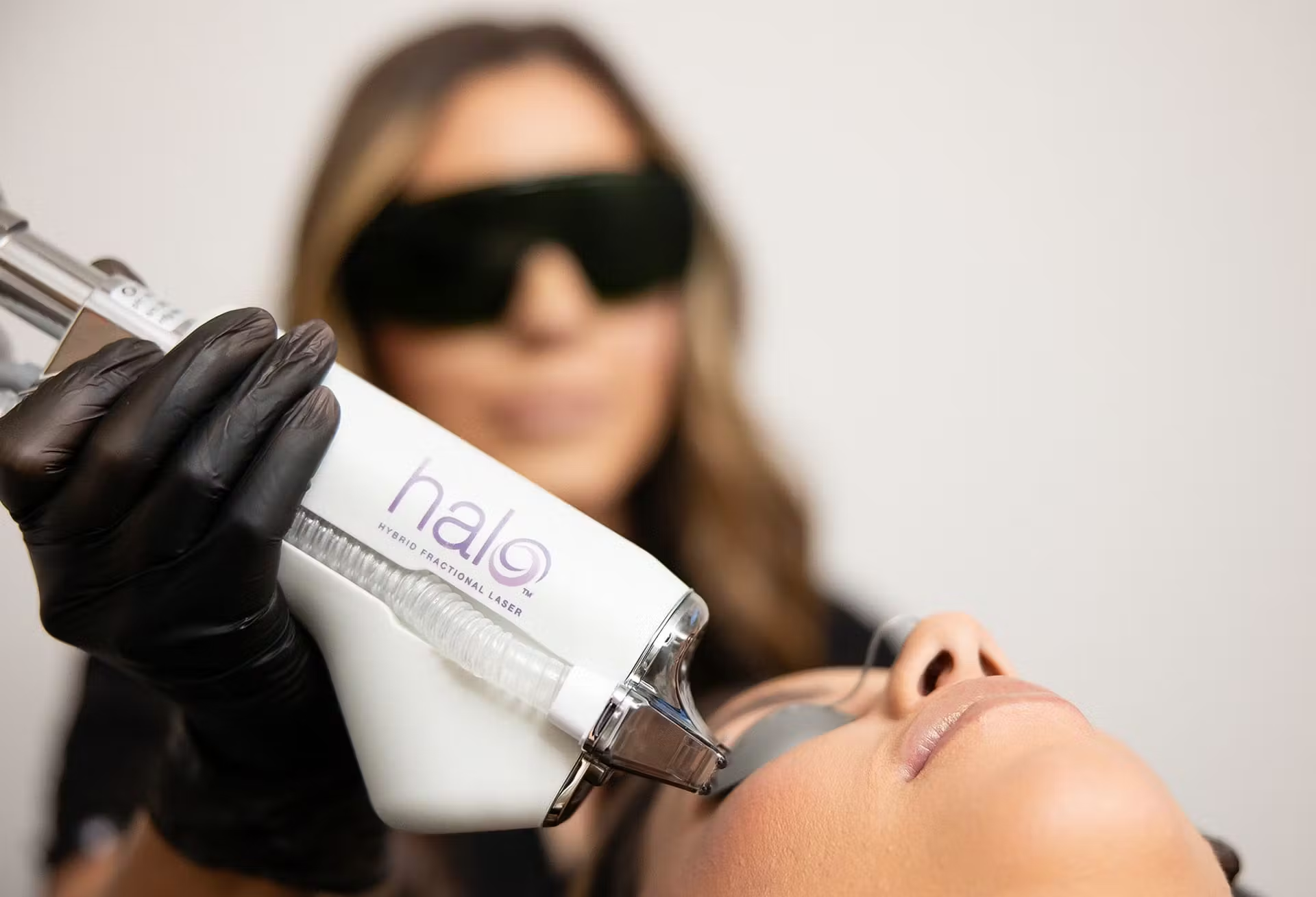
Book NowHALO® Laser is an advanced hybrid fractional laser treatment designed to target skin damage and visible signs of aging with fully customizable skin rejuvenation. By combining ablative and non-ablative laser technology, HALO® helps improve fine lines, wrinkles, sun damage, uneven skin tone, enlarged pores, acne scars, and overall skin texture while stimulating collagen production for long-term renewal. Each treatment is personalized to match your skin concerns, lifestyle, and desired downtime for natural-looking, radiant results. At Platinum Medical Spa in Edmonton, HALO® Laser treatments are customized to reveal smoother, brighter, healthier-looking, and more youthful skin.
Use a daily SPF 30+ and avoid sun exposure, tanning beds, and self-tanners for at least 4–6 weeks before treatment to reduce the risk of complications.
Stop retinoids, exfoliating acids, and active skincare products 1–2 weeks prior. Avoid chemical peels or aggressive treatments for 4–6 weeks before your appointment.
Do not proceed if you have active irritation, infection, or open wounds in the treatment area. Recently tanned or sunburned skin may require postponement.
Inform your provider of any medications, including antibiotics or photosensitizing drugs. Notify us of any recent changes in medications or supplements.
Arrive with clean skin only. Do not wear makeup, lotions, creams, or perfume on the treatment area.
Inform your provider of any recent procedures, medical conditions, or health changes to ensure safe and effective treatment. you acknowledge that outcomes are not guaranteed and depend on individual factors, as well as adherence to pre and post care instructions.
HALO combines ablative and non-ablative wavelengths in a single treatment, targeting both the surface and deeper layers of the skin for comprehensive results.
Unlike traditional resurfacing lasers, HALO delivers noticeable improvements with only a few days of recovery — making it ideal for busy lifestyles.
By stimulating natural collagen production, HALO continues to improve skin tone, texture, and firmness for months after your treatment.
Each HALO session is customized to your skin type, tone, and concerns, ensuring safe, effective results for all complexions.
HALO targets fine lines, wrinkles, enlarged pores, discoloration, and dull texture — leaving your skin smoother, brighter, and more even-toned. Before treatment, a topical anesthetic is applied to keep you comfortable. Using motion-tracking technology, your provider evenly treats the area with the HALO handpiece. Most patients feel warmth and mild prickling, followed by 30-60 minutes of residual heat. For the first 24 hours, protect your skin as advised. Peeling and flaking may occur as fresh skin surfaces. Social downtime is typically 2-5 days, but most daily activities can resume quickly. You'll see results within a few days, with continued improvements over the next few months. Results can last for years with good sun protection. Choose one or two strong treatments or opt for a series of gentler sessions — your provider will help decide what's best for you.
Moderate swelling, redness, warmth, and a sunburn-like sensation are expected. Swelling may peak within 24–72 hours and is often more noticeable the morning after treatment. Swelling may last 2–4 days depending on treatment intensity. The treated area may feel warm for 12–24 hours. Tiny dark spots and bronzing (called MENDS) may appear as the skin renews. Peeling, flaking, and a sandpaper-like texture are normal during healing. Pinpoint bleeding may occur and typically resolves within a few hours (up to 12 hours). Post-inflammatory hyperpigmentation (darkening) or hypopigmentation (lightening) may occur, particularly in darker skin types or with sun exposure. In rare cases, pigment changes may be long-lasting or permanent. Existing pigmentation conditions such as melasma may worsen.
Do not wash or touch the treated area for 12–24 hours unless advised. Avoid makeup, sunscreen, and skincare products. An occlusive barrier (e.g., Aquaphor or similar) may be applied immediately after treatment and reapplied as needed. Use cool compresses (no direct ice) to relieve discomfort. Sleep with your head elevated the first night to help reduce swelling. Allergic reactions are uncommon but may occur, including localized irritation or hive-like reactions to products applied after treatment.
Starting 24 hours after treatment, gently cleanse with a mild cleanser using your hands only and pat dry. Do not use scrubs, brushes, or exfoliating devices. Apply a moisturizer to keep the skin hydrated; Aquaphor or a healing ointment may be layered on top if additional moisture is needed. Peeling and flaking typically begin within 24 hours and should be allowed to shed naturally. Do not pick, rub, or force removal of the skin. Although uncommon, infection may occur. Patients with a history of herpes simplex (cold sores) may experience reactivation, especially when treating areas around the mouth. Contact your provider if you notice pus, increasing redness, warmth, fever, or worsening pain
Avoid heat, saunas, steam, hot showers, and strenuous exercise for at least 48–72 hours. Avoid alcohol for 48 hours. Avoid shaving and swimming for at least 1 week. Avoid direct high-pressure water on treated areas when showering. Strenuous activity and excessive sweating should be avoided until the skin has healed.
Start a mineral sunscreen SPF 30+ after 48 hours once the skin feels comfortable. Apply sunscreen 20 minutes before sun exposure and reapply every 2 hours. Avoid direct sun exposure and wear protective clothing. Avoid tanning beds and prolonged sun exposure for several weeks, as this may increase the risk of pigmentation changes. Consistent sun protection should be maintained for several weeks to months following treatment. Makeup may be resumed after 48 hours if the skin barrier feels intact. Sun exposure before and after treatment significantly increases the risk of pigmentation complications. Strict sun avoidance and consistent sunscreen use are required.
Peeling typically occurs over 5–7 days (longer on the neck or body). After peeling, the skin may appear pink and gradually return to its normal tone. Collagen remodeling continues for several months. Itching may occur during healing and is normal; antihistamines may help if needed. Continue any prescribed antiviral medication as directed. Post-treatment discomfort may be managed with over-the-counter pain relief such as acetaminophen (Tylenol) or prescribed medication if needed. Contact your provider if you experience increasing pain, severe swelling, drainage, increased warmth, fever, excessive itching, blistering, or signs of infection. Results vary between individuals and are influenced by multiple factors. No guarantee, expressed or implied, can be made regarding final outcomes. Strict adherence to pre- and post-care instructions is essential to reduce the risk of complications and achieve optimal results.
Treatments
Get your treatment done sooner by filling out our consent form prior to your visit.
Consent form